
Resources
We hope that landowners and livestock producers find this information helpful in their pursuit of being the best natural resource stewards they can be.
A thing is right if it tends to preserve the stability, integrity, and beauty of the biotic community. It is wrong if it tends otherwise.
Aldo Leopold, 1966
Featured articles

Program Manuals
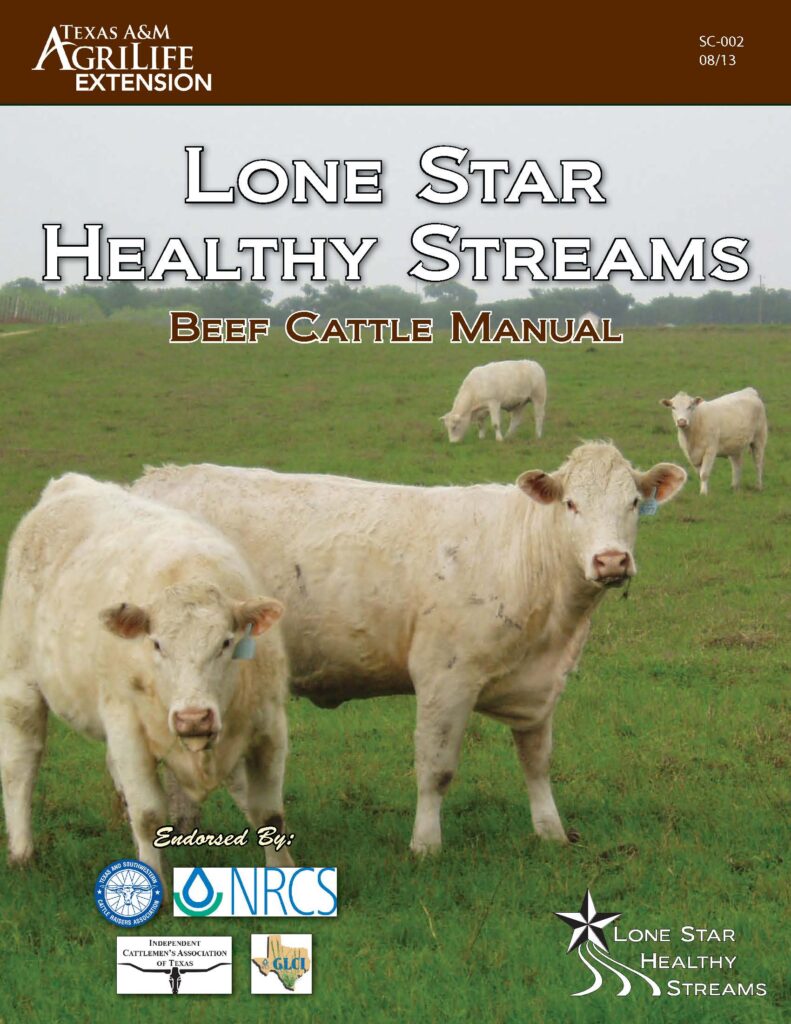
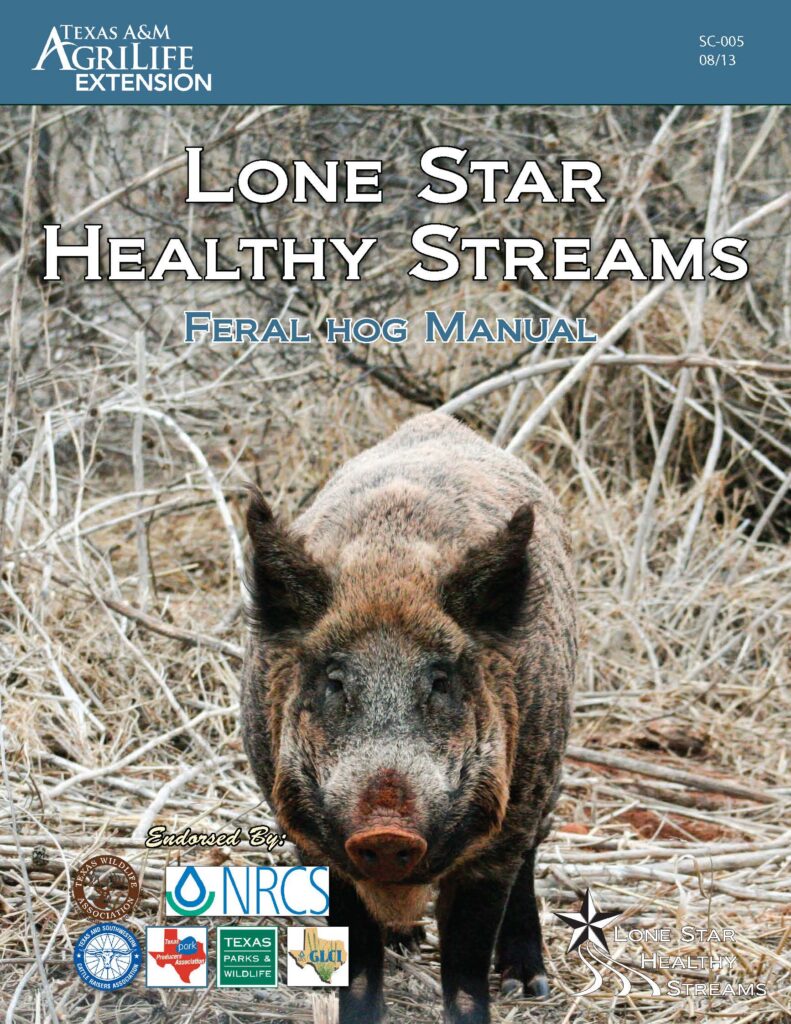

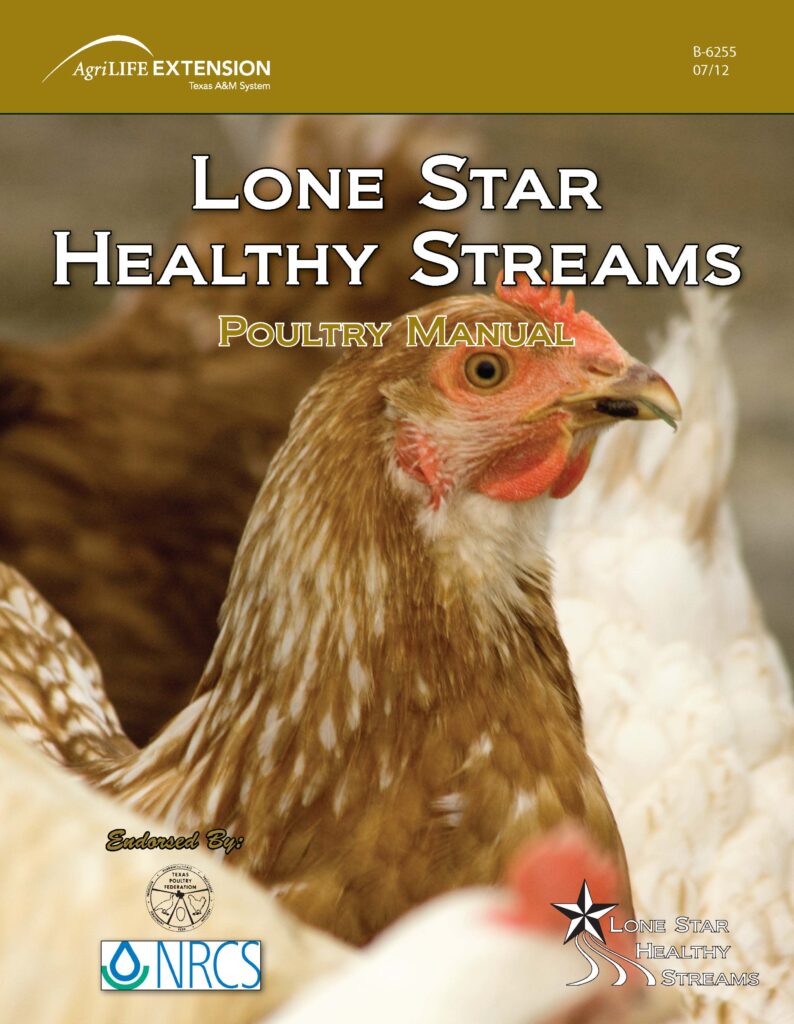
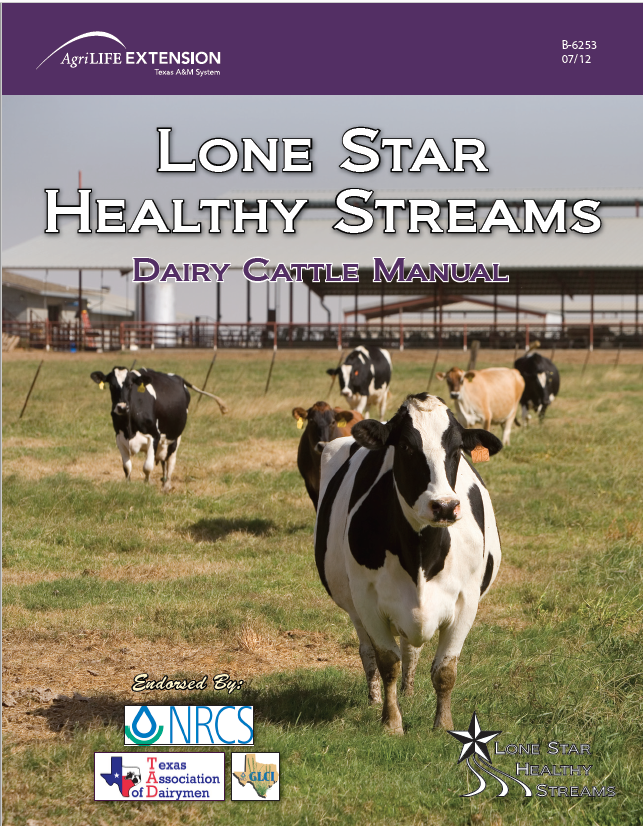
Online Course – Free at AgriLife Learn
Grazing Livestock Best Management Practices
Best Management Practices Factsheets
click the drop down for each BMPs description and a hyperlink to a factsheet
Access Control

Access Control
Excluding livestock, people, or vehicles from restricted or environmentally sensitive areas.
Building Location

Building Location
The proper location of barns, storage areas, and compost piles on land with well-drained soils and away from streams, ponds, wetlands, and other bodies of water.
Selecting a proper building location implies that all stormwater will be directed away from structures and towards filter strips or a vegetated water retention system by constructing berms, terraces, and grading.
Feed, Salt, and/or Mineral Location

Feed, Salt, and/or Mineral Location
The placement of feed, salt, and/or mineral locations off-stream as an attempt to improve grazing distribution and encourage livestock to move away from sensitive riparian areas.
Fence

Fence
Fence barrier to distribute grazing and control livestock access to waterways.
Filter Strips

Filter Strip
A strip or area of herbaceous vegetation established between cropland, grazing land, or disturbed land that removes contaminants from overland flow.
Heavy Use Area Protection

Heavy Use Area Protection
The stabilization of areas frequently and intensively used by people, animals, or vehicles by establishing vegetation cover, surfacing with suitable materials, and/or installing needed structures.
Livestock Shade Structure

Livestock Shade Structure
A permanent or portable framed structure to provide shade for livestock away from the riparian area and to improve grazing distribution.
Livestock Prescribed Grazing

Livestock Prescribed Grazing
The controlled harvest of vegetation with grazing or browsing animals, managed with the intent to achieve a specified objective. This practice employs utilization of grazing management principles that define stocking rate; rest periods; and intensity, frequency, duration, and season of grazing to promote ecologically and economically stable plant communities that meet both the land manager’s objectives and resource needs.
Moderate stocking has been shown to not significantly increase E. coli levels above background levels and provide additional benefits to producers. This, in combination with deferred grazing on creek pastures during rainy periods and use of other practices, can significantly reduce bacterial runoff.
Roof Runoff Structure

Roof Runoff Structure
Structures such as gutters, downspouts, and outlets that collect, control, and transport precipitation from roofs. During heavy rains, large amounts of water drain off the roofs of farm houses, barns, and other buildings. Flooding, erosion, and pollution problems can result, but can be greatly minimized simply by keeping roof rainwater away from buildings and other important areas on the farm.
Stream Crossing

Stream Crossing
A stabilized area or structure constructed across a stream to provide a travel way for people, livestock, equipment, or vehicles.
Waste Storage Facility

Waste Storage Facility
A waste storage impoundment made by constructing an embankment and/or excavating a pit or dugout, or by fabricating a structure. The primary purpose of this practice is to temporarily store wastes such as manure, wastewater, and contaminated runoff as a storage function component of an agricultural waste management system. An optimal use of waste storage is to improve the timing of manure applications so that manure nutrients are distributed to fields based on crop needs and soil fertility tests, instead of repeated applications on the same field based on convenience.
Waste Utilization

Waste Utilization
Using agricultural wastes such as manure and wastewater or other organic residues.
Water Harvesting Catchment

Water Harvesting Catchment
A facility for collecting and storing precipitation to provide water for livestock, fish and wildlife, recreation, or other purposes.
Watering Facility

Watering Facility
A permanent or portable off-stream water supply, such as a trough or pond system, that provides an adequate amount and quality of drinking water for livestock and/or wildlife and also helps improve animal distribution.
Additional Resources
Click on the image below to open a list of resources that is clickable, printable and shareable. Each title listed is the link to the full resource.
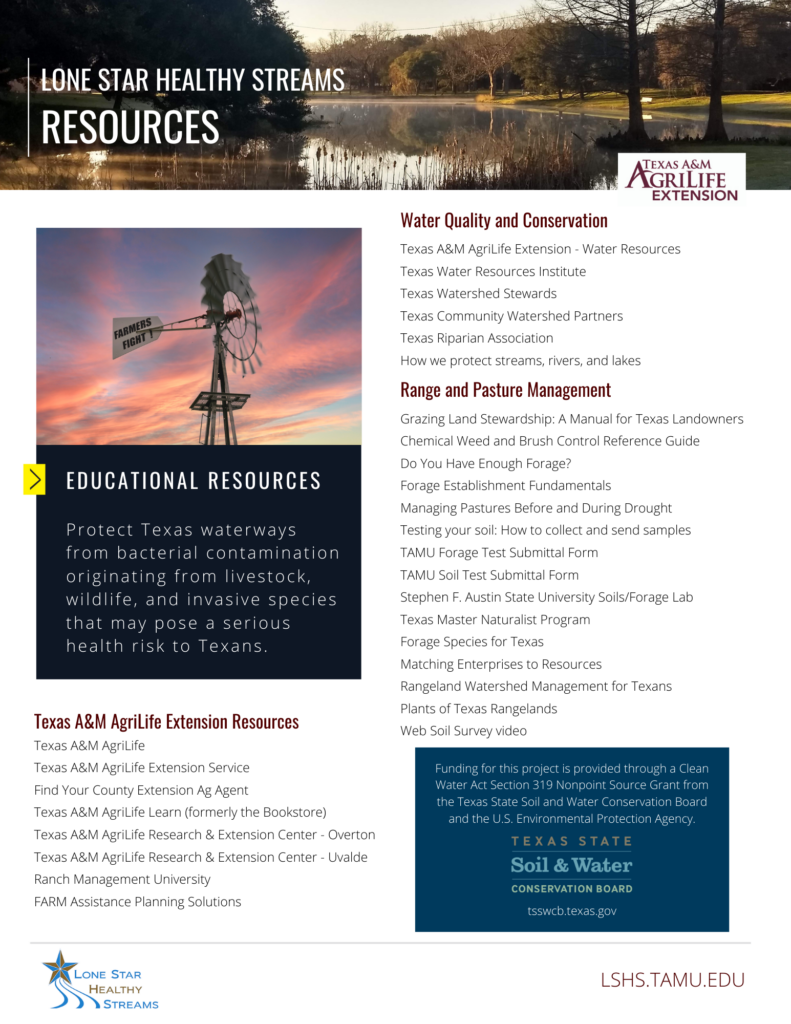
Educational Resources
Additional publications on various topics from leading universities, institutions, and partners.
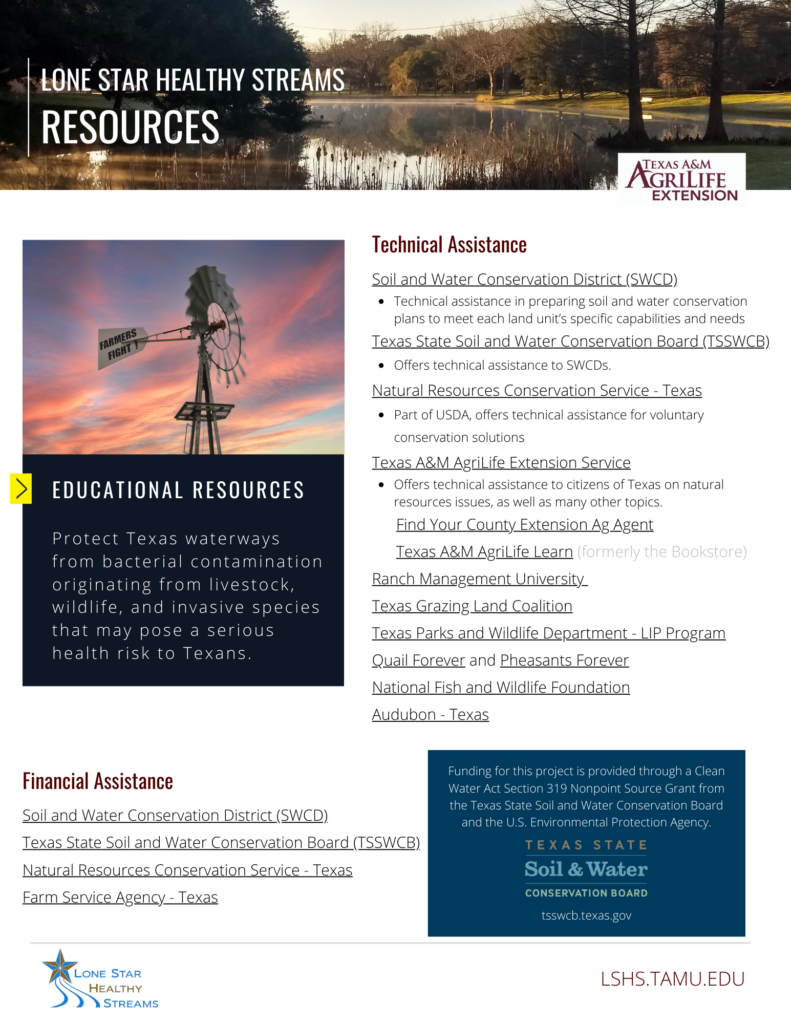
Technical & Financial Assistance
Many agencies offer free consultations, seminars, and guidance on applying for financial assistance
The Lone Star Healthy Streams (LSHS) program is implemented through a partnership between The Texas A&M AgriLife Extension Service and the Texas State Soil and Water Conservation Board (TSSWCB).

“Funding for this project is provided through a Clean Water Act Section 319 Nonpoint Source Grant from the Texas State Soil and Water Conservation Board and the U.S Environmental Protection Agency.”